


Research Background: Challenges in Depression Treatment and the Discovery of New Target
Major Depressive Disorder (MDD) is highly prevalent worldwide. Existing mainstream drugs primarily target the monoaminergic system (e.g., serotonin, norepinephrine) and suffer from issues such as slow onset (weeks), limited efficacy, and numerous side effects, creating an urgent need for therapies with novel mechanisms. In 2019, Kirill A. Martemyanov, one of the authors of this study, discovered and named mGlyR (derived from the orphan receptor GPR158). This receptor is highly expressed in the prefrontal cortex (PFC) and is significantly upregulated under stress and in patients with depression. Genetic studies have shown that knocking out mGlyR induces an antidepressant phenotype and stress resilience in mice, making it a highly attractive novel drug target. The mechanism of mGlyR differs from traditional GPCRs; mGlyR does not directly couple to G proteins but influences downstream signaling by modulating the GAP (GTPase-Activating Protein) activity of the RGS7/Gβ5 complex. Glycine is its endogenous ligand, but it acts to inhibit receptor function.
Core Technology: Why Choose Nanobodies?
Faced with mGlyR, a membrane protein target lacking highly selective chemical probes, the research team chose nanobodies (single-domain antibodies), an emerging tool with the following characteristics:
- High Affinity and Specificity: Derived from alpacas, composed of only a single heavy-chain variable domain (VHH), small in size yet with strong binding capability.
- Precise Targeting: Can accurately recognize specific conformational states of extracellular domains, making them suitable for targeting receptors like mGlyR with large extracellular regions.
- Good Stability and Ease of Production: Can be expressed in large quantities in bacterial systems at relatively low cost.
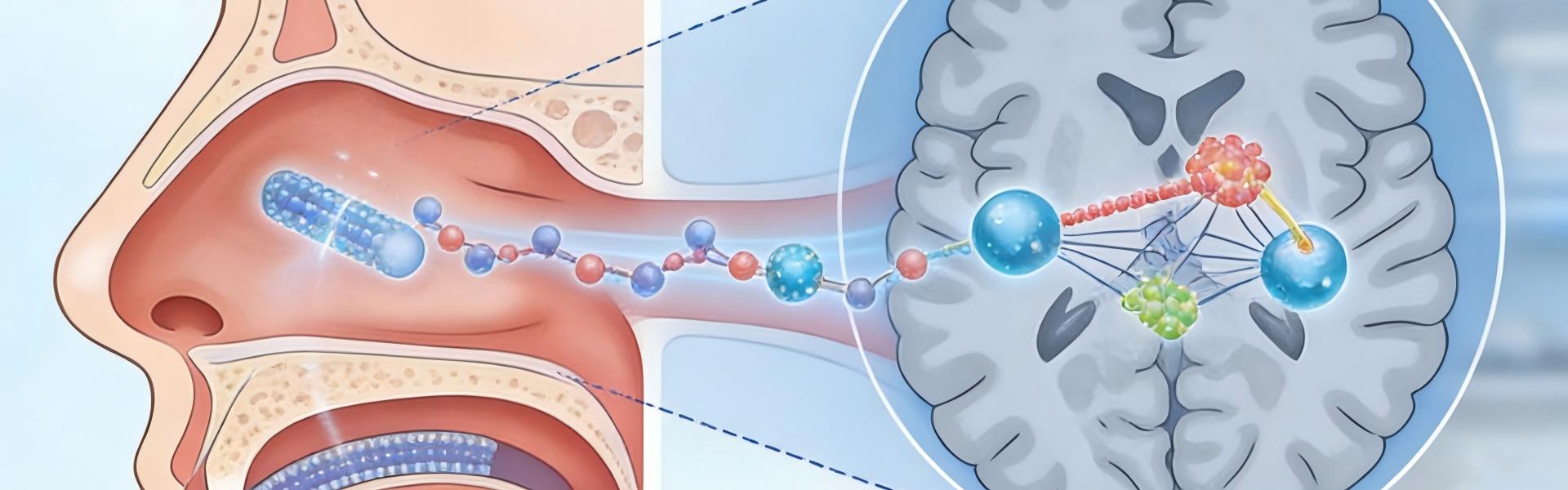
- Potential Advantage for Brain Delivery: Their small size facilitates delivery across the blood-brain barrier or via other non-invasive routes (e.g., the nose-to-brain pathway).
Key Findings and Data Interpretation
Successful Screening of the High-Affinity, High-Specificity Nanobody Nb20
- Development Pipeline: Alpacas were immunized with mGlyR to construct a phage display library. After multiple rounds of high-throughput screening, the clone with the strongest binding—Nb20—was identified from 61 enriched clones (see Fig. 1a).
- Binding Characteristics: Flow Cytometry showed its binding to mGlyR on cell membranes with an EC50 of approximately 10 nM (see Fig. 1d,e). Surface Plasmon Resonance (SPR) measured a KD of 375 nM for binding to the purified receptor extracellular domain (the higher affinity observed in cell-based assays may be due to an avidity effect) (see Fig. 1f,g).
- Critical Validation: The binding of Nb20 was not affected by glycine and showed no binding to other related GPCRs, proving its unique and specific binding epitope.
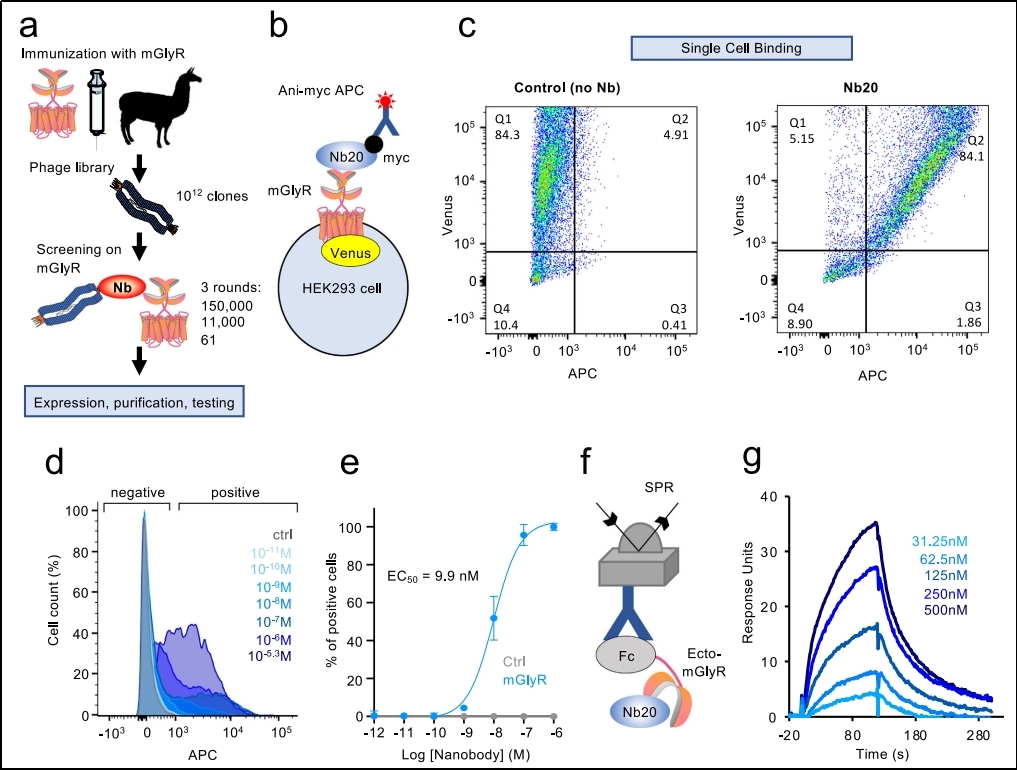
Figure 1. Development and validation of the mGlyR nanobody.
Nb20 Specifically Inhibits the GAP Activity of the mGlyR-RGS7/Gβ5 Complex
- Functional Validation: In a BRET-based GAP activity assay, Nb20 could specifically inhibit the deactivation of the Gαo protein mediated by the mGlyR-RGS7/Gβ5 complex, with an IC50 of approximately 6 nM. This indicates that Nb20 mimics the "inhibitory" effect of the endogenous ligand glycine (see Fig. 2b,c,d,e).
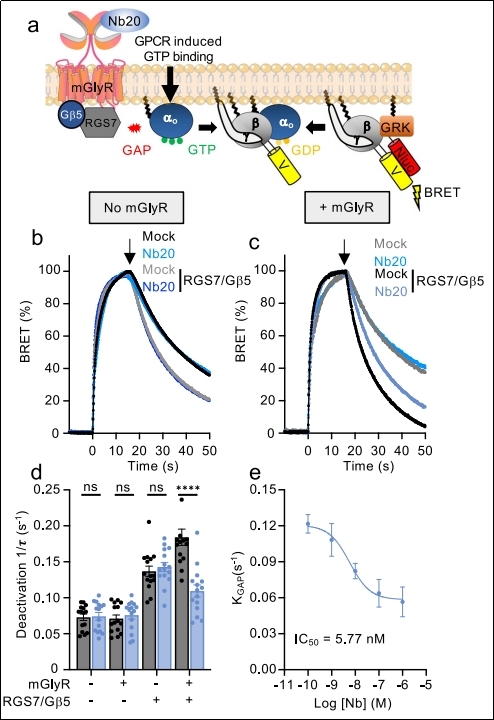
Figure 2. Modulation of the GAP activity of the mGlyR-RGS7/Gβ5 complex by Nb20.
Cryo-EN Reveals the Mechanism: Conformational Remodeling from Extracellular to Intracellular
- Structural Determination: The research team successfully resolved the cryo-electron microscopy (cryo-EM) structures of the Nb20-mGlyR and Nb20-mGlyR-RGS7/Gβ5 complexes (with resolutions of 3.49 Å and 3.89 Å, respectively) (see Fig. 3a,b).
- Binding Site: Nb20 binds to the lateral side of the dimeric interface formed by the two ligand-binding Cache domains of the mGlyR dimer, primarily interacting with the receptor through its CDR1 and CDR2 loops (see Fig. 3c,d).
- Conformational Change: Compared to the unbound receptor, Nb20 binding induced a translation of up to 12 Å and a rotation of approximately 7° in the receptor's extracellular domain (ECD). This change is transmitted to the intracellular side through the transmembrane region.
- Mechanistic Inference: Nb20 binding stabilizes a specific conformation of the receptor, leading to increased flexibility of the interacting RGS7/Gβ5 complex, particularly its catalytic RGS domain. This likely prevents its effective positioning and catalysis of membrane-localized Gα proteins, thereby blocking signal transduction. This provides a structural basis for the "inhibitory" function.
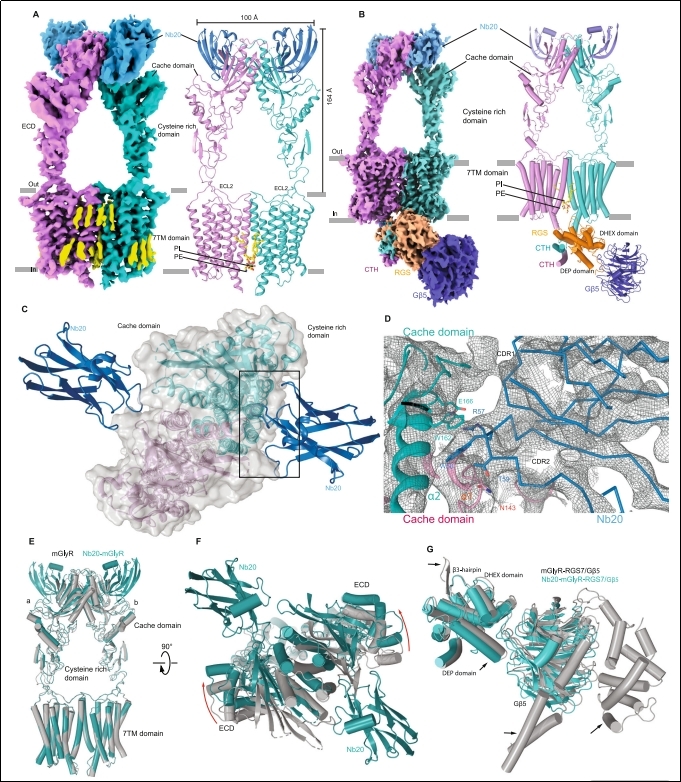
Figure 3. Cryo-EM structure of the mGlyRin complex containing Nb20.
Animal Model Validation: Outstanding Antidepressant Efficacy
- Direct Intracerebral Injection: Following intracerebroventricular (ICV) injection of Nb20, mice exhibited significant antidepressant-like behaviors in the marble burying test, tail suspension test, and forced swim test, with effects lasting at least two weeks (see Fig. 4a,b,c).
- Non-Invasive Intranasal Delivery (Core Highlight): In a mouse model of depression induced by chronic variable stress, intranasal administration of Nb20 produced robust effects comparable in efficacy to the rapid-acting antidepressant ketamine, with similar effects in both sexes.
- Specificity and Safety Validation: The binding-deficient mutant Nb20* had no effect, proving target specificity (see Fig. 4d,e). Nb20 did not affect the locomotor activity, motor coordination, or hedonic behavior of the mice.
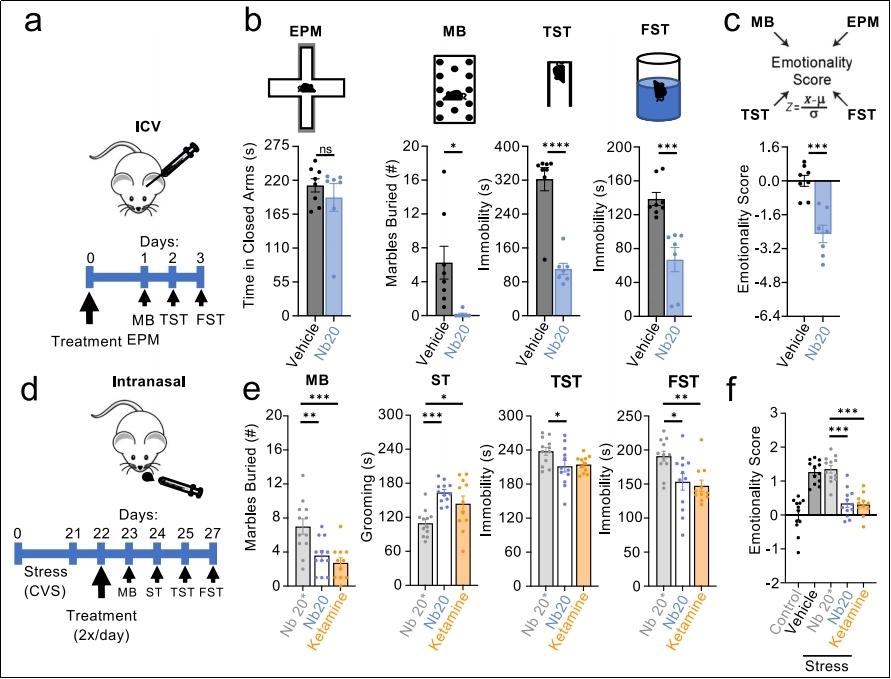
Figure 4. Effects of Nb20 administration on antidepressant-like behaviors in mice.
Impact on Neural Circuits: Increased Excitability of Prefrontal Cortex Neurons
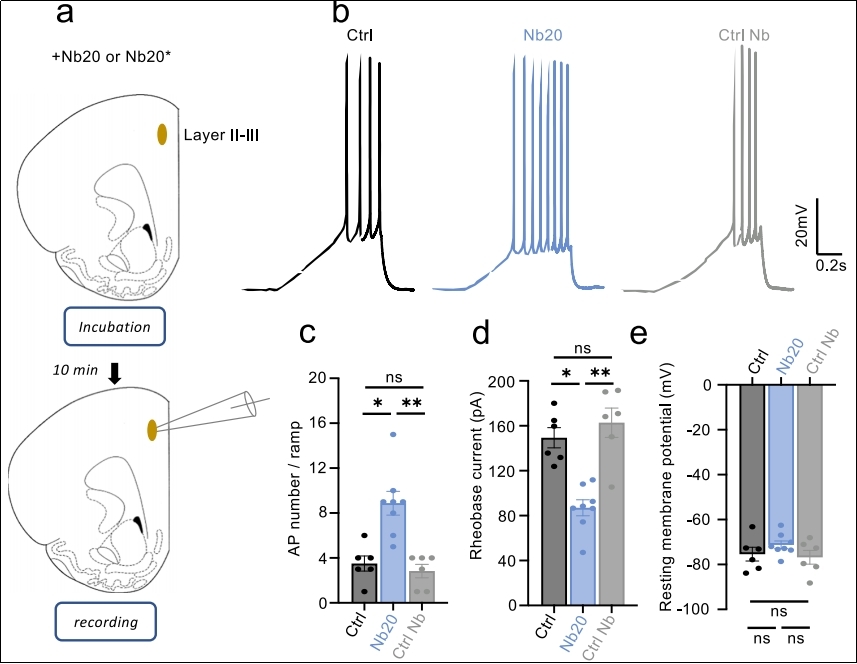
- In brain slice electrophysiology experiments, Nb20 treatment significantly increased the excitability of layer II-III pyramidal neurons in the prelimbic cortex (increased action potential firing, decreased threshold current). This effect is consistent with the results of mGlyR knockout or inhibition by glycine, providing a circuit-level explanation for its potential mechanism of action (see Fig. 5).
Research Conclusions and Significance
Conclusion:
This study is a paradigm of interdisciplinary integration in neuroscience, structural biology, and antibody engineering. It not only discovered an effective antidepressant nanobody but, more importantly, opened a new door: it demonstrated that utilizing highly specific, non-invasively deliverable nanobodies to precisely modulate difficult-to-drug GPCR targets in the brain represents a promising novel pathway for treating major neuropsychiatric disorders. This brings new hope to countless patients suffering from depression and points the way for the biopharmaceutical industry to develop next-generation therapies for neuropsychiatric diseases.
Significance:
The therapeutic modality innovation in this study marks the first application of nanobody-based immunotherapy to mood disorders like depression, breaking through the limitations of traditional small-molecule and macromolecular biologics. Furthermore, it successfully demonstrated that intranasal delivery, a non-invasive method, can effectively deliver nanobodies to the brain for functional activity, significantly enhancing the convenience of clinical translation and patient compliance. It provides the most compelling tool compound and proof-of-concept validation for mGlyR as a next-generation antidepressant target.
This research also highlights the core value of powerful antibody discovery and engineering platforms in translational medicine. Our company, Nanobody Life, possesses the pDual improved dual-functional phage display technology within the NabLib® platform. This technology enables seamless transition from the efficient development of traditional phage display to high-efficiency mammalian cell production, greatly improving the efficiency of screening out problematic molecules. The NabLib® mammalian cell display technology not only enhances the developability of screened molecules but also allows flexible selection of antibody screening formats, providing better assurance for downstream antibody molecule applications and detection.

Wuhan Nanobody Life Science & Technology Co., Ltd. is a nanobody industry platform established under the lead of the Wuhan Industrial Innovation & Research Institute. Headquartered in the main building of the Institute within the East Lake High-Tech Development Zone in Wuhan, the company operates a proprietary laboratory spanning 1,400 sq.m at the Precision Medicine Industrial Base in Wuhan Bio-City. It has also established alpaca experimental and transfer bases in Zuoling, Wuhan, and Tuanfeng, Huanggang, compliant with laboratory animal standards. Currently housing over 600 alpacas, these bases can provide alpaca immunization services with "zero immunological background" assurance for research institutions and antibody drug R&D enterprises.
Nanobody Life focuses on the development, engineering, and application of nanobodies, committed to building an integrated industry-academia-research experimental public service platform. It currently possesses a full-chain technology platform encompassing antigen preparation (peptides, proteins, and RNA), antibody discovery and engineering, and biological function verification/screening. RNA antigens include those structurally and sequentially optimized for alpacas. Antibody discovery and engineering services employ multiple technological routes, including phage display and mammalian cell display. Through the complementary use of multiple platforms, it provides flexible antibody discovery and engineering services for pharmaceutical companies and research institutes, facilitating drug and reagent R&D.
- Contact Information:
Phone: 400-822-9180
Email: marketingdept@nanobodylife.com