



- Details
- Parent Category: Knowledge Base
- Hits: 227
Lupus erythematosus is a chronic and relapsing autoimmune disease, commonly affecting women aged 20–40 years. Based on the site of pathological involvement, it is classified into cutaneous lupus erythematosus (CLE), which is confined to the skin, and systemic lupus erythematosus (SLE), which affects multiple organs throughout the body.

- Details
- Parent Category: Knowledge Base
- Hits: 223
Owing to its multiple advantages, nanobodies have been widely applied and studied in the field of biological research. Beyond the mainstream research directions, they also hold great potential in the fields of food safety and agricultural development. Nowadays, this technology is gradually being applied to research in the field of transdermal drug delivery.

- Details
- Parent Category: Knowledge Base
- Hits: 217
Recently, Ivonescimab Injection, independently developed by Akeso-Sino Biopharmaceutical Co., Ltd. and the world's first of its kind, has been officially approved for marketing. Combined with chemotherapy, Ivonescimab Injection is expected to provide a brand-new and highly effective immunotherapeutic regimen for patients with locally advanced or metastatic non-squamous non-small cell lung cancer.
- Details
- Parent Category: Knowledge Base
- Hits: 210
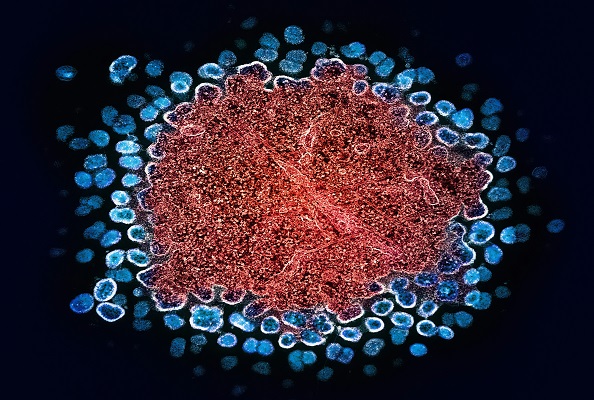
Pathogenic microorganisms can cause a variety of infectious diseases. Large - scale outbreaks of infectious diseases such as Ebola hemorrhagic fever, COVID - 19 infection, and malaria pose severe threats to human life and health, and even trigger social crises. This has driven researchers to seek simpler and more effective methods for treating infectious diseases. Controlling the source of infection, cutting off the route of transmission, and protecting susceptible populations are the keys to preventing and controlling infectious diseases.

- Details
- Parent Category: Knowledge Base
- Hits: 223
Since their discovery, nanobodies have been widely applied in fields such as tumor/neurological disease research and imaging diagnosis. In recent years, researchers have gradually expanded their application to more domains, including food safety and environmental hygiene testing. Recently, researchers have conducted studies on the application of nanobodies in animal husbandry.
- Details
- Parent Category: Knowledge Base
- Hits: 214
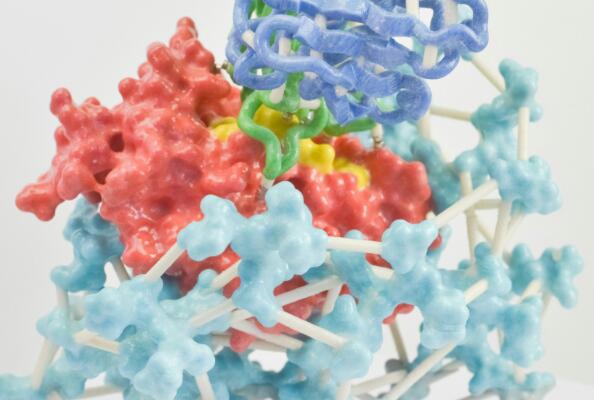
Chemokines are a class of small cytokines or signaling proteins secreted by cells. They are so named because of their ability to induce directional chemotaxis of nearby responsive cells. All their receptors belong to the G protein - coupled receptor (GPCR) family with 7 - transmembrane domains, and are mainly expressed in cells such as neutrophils, macrophages, epithelial cells, smooth muscle cells, and fibroblasts [1].

- Details
-
Also available in:

- Parent Category: Knowledge Base
- Hits: 379
In the 1970s, scientists discovered the first incretin hormone, GIP (Glucose-Dependent Insulinotropic Polypeptide), and later identified the second incretin hormone: Glucagon-Like Peptide-1 (GLP-1). GLP-1 is secreted by intestinal L cells in the distal small intestine and proximal colon, encoded by the proglucagon gene, and is a polypeptide consisting of 30 amino acids[1-3].

- Details
-
Also available in:
- Parent Category: Knowledge Base
- Hits: 1160
The development of society is closely linked to the labor force. Workers contribute their wisdom, skills, and sweat, creating numerous advancements in science, technology, and cultural arts. With the progress and changes in technology and culture, people's lifestyles are gradually evolving. Due to the rapid development of society, modern individuals are inclined towards highly defined and efficient ways of living. However, this shift has led to a sudden increase in the prevalence of mental illnesses due to the neglect of the spiritual world.