









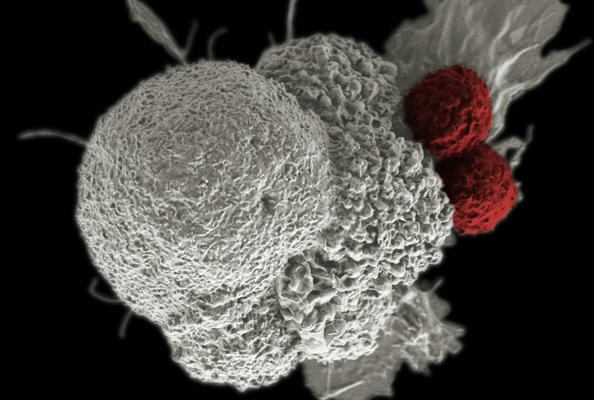
c-MET is a receptor tyrosine kinase encoded by the MET proto-oncogene. It consists of an extracellular ligand-binding domain, a transmembrane region, and an intracellular tyrosine kinase domain, and is primarily located on the cell surface. Its sole ligand is Hepatocyte Growth Factor (HGF). Under normal physiological conditions, binding with its…
c-MET is a receptor tyrosine kinase encoded by the MET proto-oncogene. It consists of an extracellular ligand-binding domain, a transmembrane region, and an intracellular tyrosine kinase domain, and is primarily located on the cell surface. Its sole ligand is Hepatocyte Growth Factor (HGF). Under normal physiological conditions, binding with its ligand HGF activates downstream signaling pathways, regulating cell proliferation, migration, differentiation, survival, and tissue repair. This is crucial for embryonic development and maintaining tissue homeostasis in adults. However, when the MET gene undergoes mutation, amplification, overexpression, or exon 14 skipping, the c-MET signaling pathway becomes abnormally and constitutively activated. This drives tumor growth, invasion, metastasis, and angiogenesis, and is also a key mechanism of resistance to EGFR-targeted therapies.
c-MET(细胞间质上皮转换因子/肝细胞生长因子受体/HGFR)是一种由MET原癌基因编码的受体酪氨酸激酶,由胞外配体结合区、跨膜区和胞内酪氨酸激酶结构域组成,主要存在于细胞表面,唯一配体为肝细胞生长因子(HGF)。其功能正常时,与配体HGF结合后,可激活下游信号通路,调控细胞的增殖、迁移、分化、存活及组织修复,对胚胎发育和成人组织稳态至关重要,但当MET基因发生突变、扩增、过表达或发生14号外显子跳跃时,会导致c-MET信号通路被异常、持续激活,从而驱动肿瘤的生长、侵袭、转移和血管生成,也是导致EGFR靶向药耐药的主要机制之一。
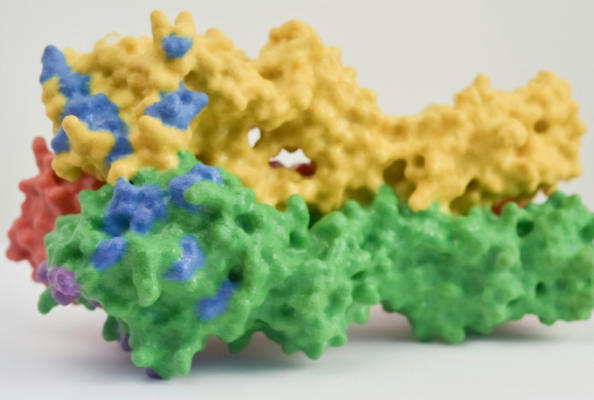
TSLP (Thymic Stromal Lymphopoietin) is a pleiotropic cytokine primarily secreted by epithelial cells, fibroblasts, mast cells, etc. It mainly acts on various cells such as dendritic cells, T cells, and B cells, promoting their activation, differentiation, and proliferation, and inducing them to secrete Th2 cytokines. It activates signaling…
TSLP (Thymic Stromal Lymphopoietin) is a pleiotropic cytokine primarily secreted by epithelial cells, fibroblasts, mast cells, etc. It mainly acts on various cells such as dendritic cells, T cells, and B cells, promoting their activation, differentiation, and proliferation, and inducing them to secrete Th2 cytokines. It activates signaling pathways like JAK-STAT, thereby initiating Th2-type immune responses and playing a crucial role in immune regulation, inflammatory responses, and disease development.
TSLP(胸腺基质淋巴细胞生成素)是一种具有多效性的细胞因子,主要由上皮细胞、成纤维细胞、肥大细胞等分泌,主要作用于树突状细胞、T细胞、B细胞等多种细胞的激活、分化和增殖,并使其分泌Th2细胞因子,激活JAK-STAT等信号通路,进而引发Th2型免疫反应,在免疫调节、炎症反应及疾病发生中发挥关键作用。
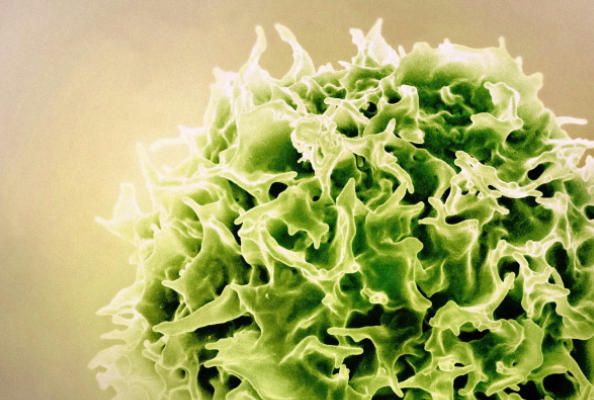
CD5(Cluster of Differentiation 5)是一种关键的跨膜糖蛋白受体,隶属于清道夫受体家族,其核心功能是负向调节T细胞受体(TCR)和B细胞受体(BCR)介导的信号传导,维持机体免疫耐受,避免淋巴细胞过度活化。如在肿瘤细胞中,CD5通过调控NF-κB、PI3K/Akt等通路,促进肿瘤细胞增殖存活并抑制凋亡。CD5是T细胞的经典标志物,几乎在所有成熟T细胞表面都有表达。此外,它也在部分B细胞和NK细胞亚群中表达,但在正常造血干细胞及非造血实体组织中不表达。这种高度受限的表达谱,为开发高特异性、低脱靶毒性的靶向疗法奠定了理想基础。